Interpretive writing for the Alchemy of Knowledge
I was hired as a contract writer and exhibit developer for Linda Hall Library, a renowned history of science library in Kansas City whose extraordinary collection spans more than five centuries. Among its rare holdings are first editions and original works by scientists such as Galileo Galilei.
Over the course of two years, I collaborated with historians, curators, and librarians to transform these remarkable artifacts into Alchemy of Knowledge, an exhibit exploring a timeless question: What does it mean to be human in an age of technological transformation?
An exhibit is built long before it’s installed.
The three steps I took to transform centuries of history into a visitor experience
-
Every exhibit begins with learning. I immersed myself in conversations with historians, librarians, researchers, and artists, listening far more than I spoke. My role was to absorb decades of scholarship, ask questions, and discover the human stories hidden in Early Modern history.
-
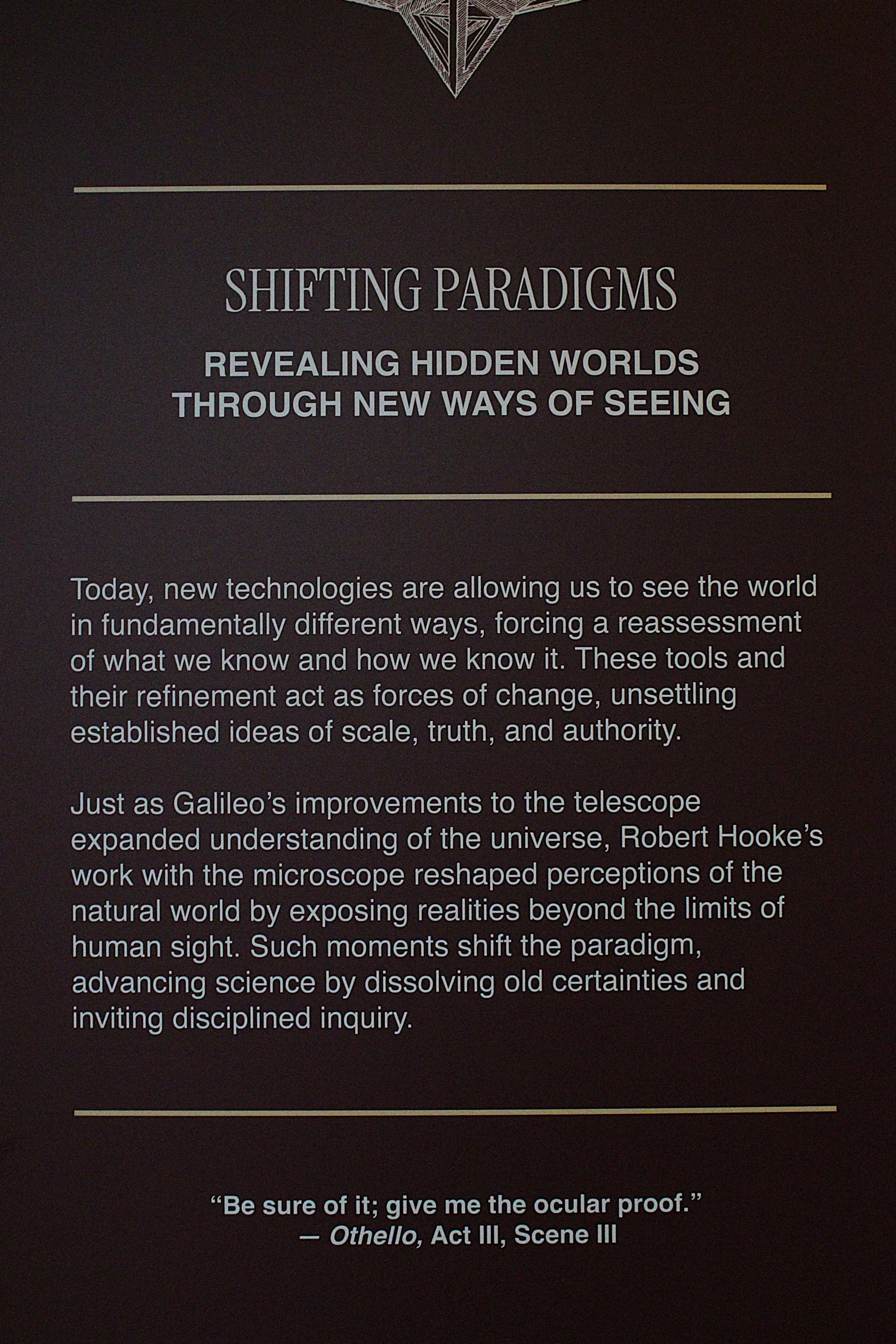
With a deeper understanding of the collection and its themes, I transformed historical facts into a narrative spanning the fifteenth century to the present day. To keep the exhibit engaging, I presented information in different ways throughout the exhibit. I wrote introductory panels that guided visitors from one section to the next, character profiles that helped them connect with the lives behind scientific discovery, and first-person narratives that immersed them in pivotal moments in history.
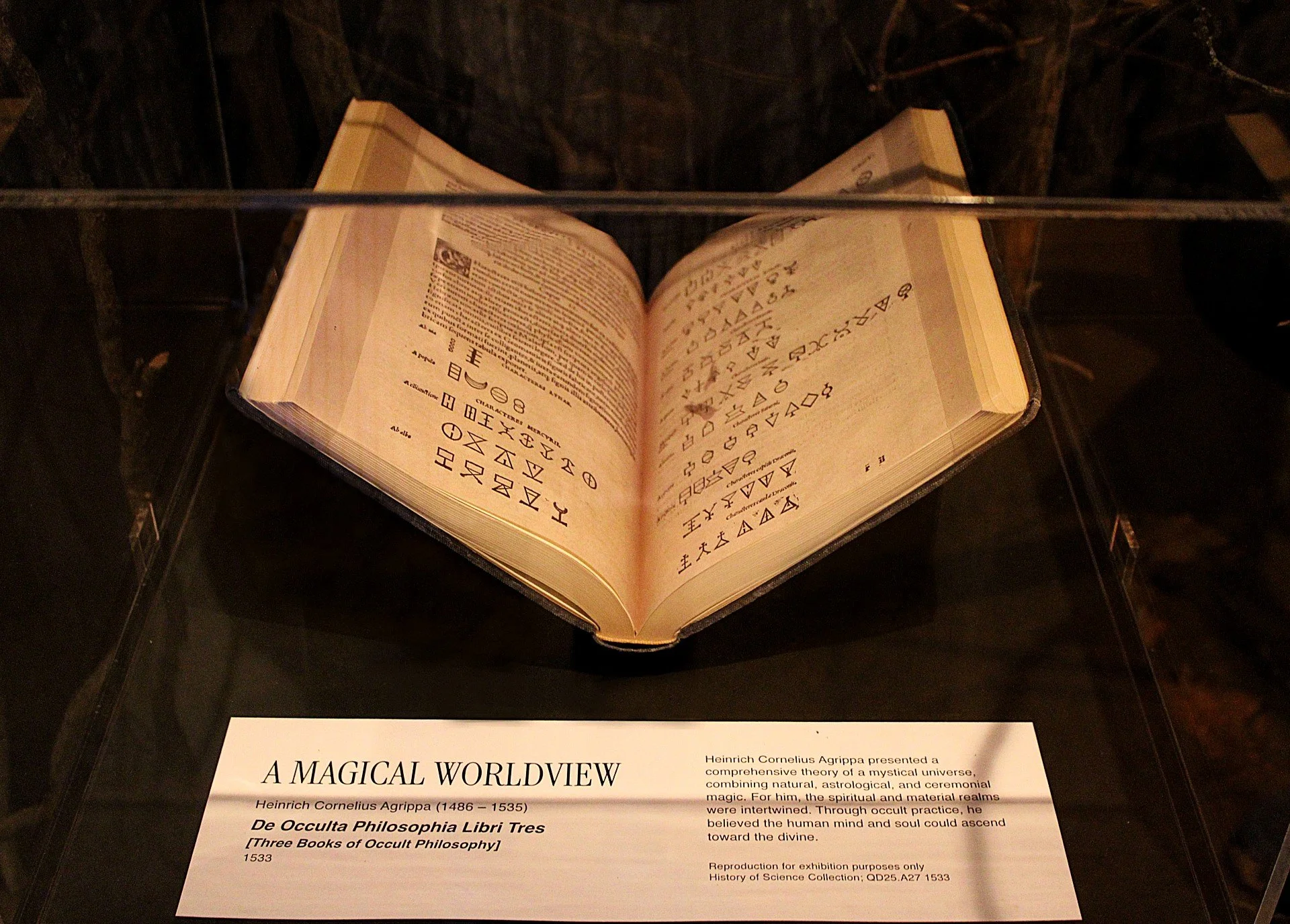
I also curated every book displayed in the exhibit, selecting works that best advanced the narrative and showcased the depth of Linda Hall Library's extraordinary collection. For each object, I wrote interpretive labels that highlighted not only the significance of the artifact itself, but also the ideas, innovations, and disruptions it introduced to the world.
Although Alchemy of Knowledge centered on the history of science, I sought opportunities to weave art and literature into the visitor experience. Drawing on the works of William Shakespeare, who lived through many of the same transformative moments explored in the exhibit, I incorporated quotations and literary connections that revealed how scientific and artistic revolutions unfolded side by side.
-
Interpretive writing is an exercise in precision. Every sentence was carefully revised to balance historical accuracy with clarity, ensuring that complex ideas remained engaging and accessible to visitors. Through an iterative process of writing, feedback, and editing, I crafted text that complemented the artifacts and invited visitors to linger, question, and discover.
The process was rarely linear. Some of the strongest pieces emerged only after setting aside entire drafts and beginning again with a new perspective. Refinement wasn't just about polishing words. It often meant stepping back, rethinking the approach, and finding a clearer, more compelling way to tell each story.
My writing on display
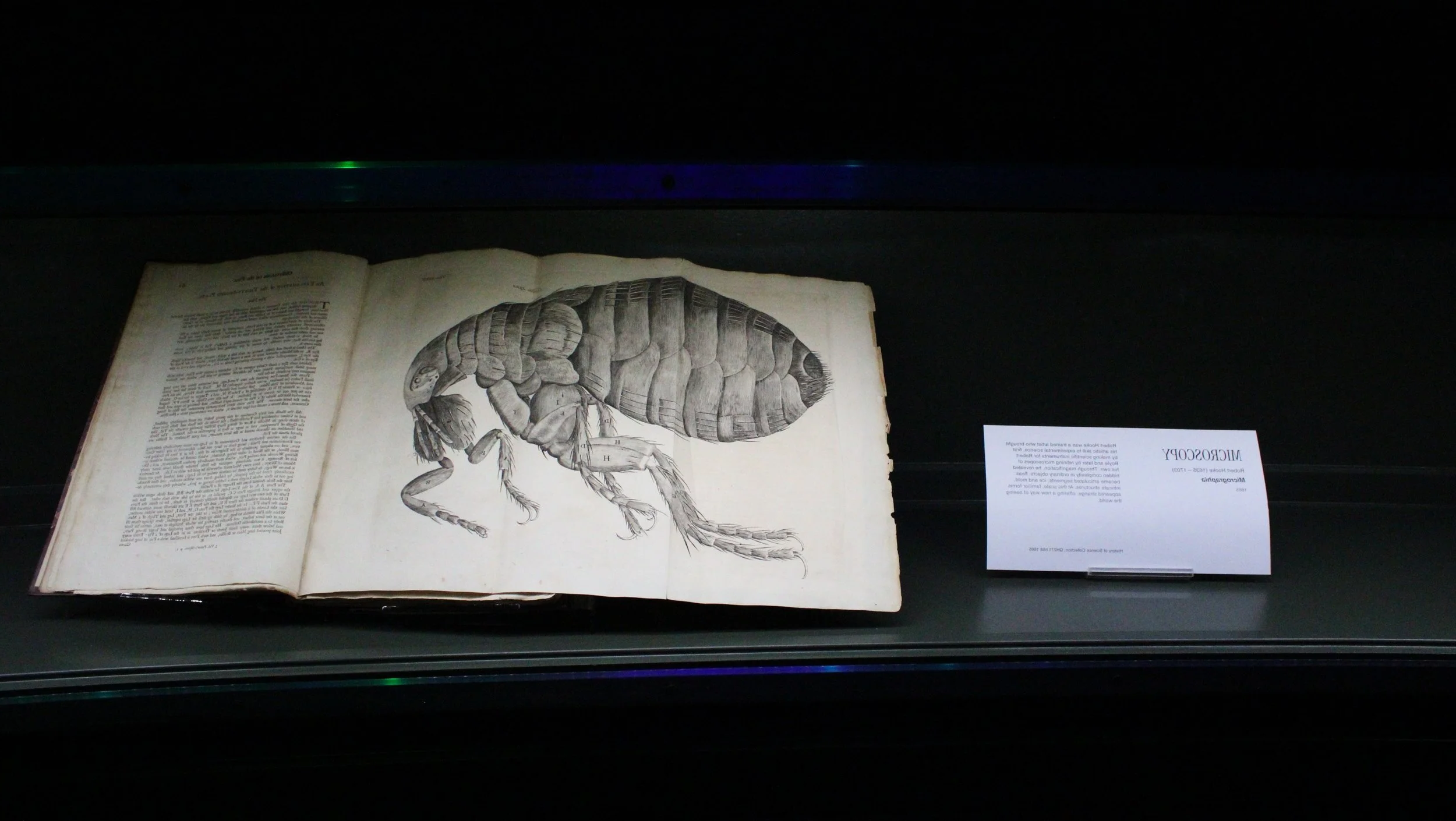
Graphic panels
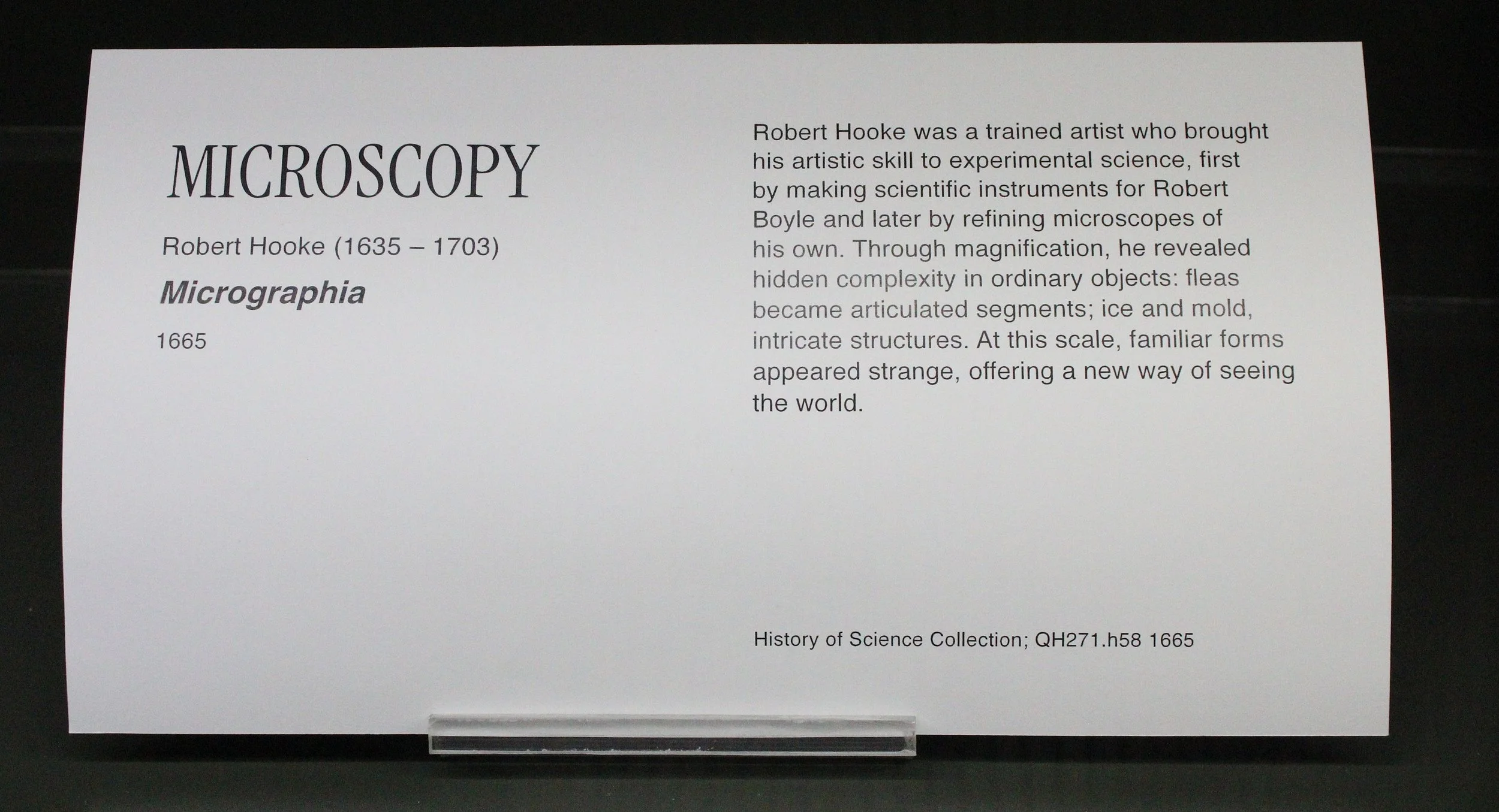
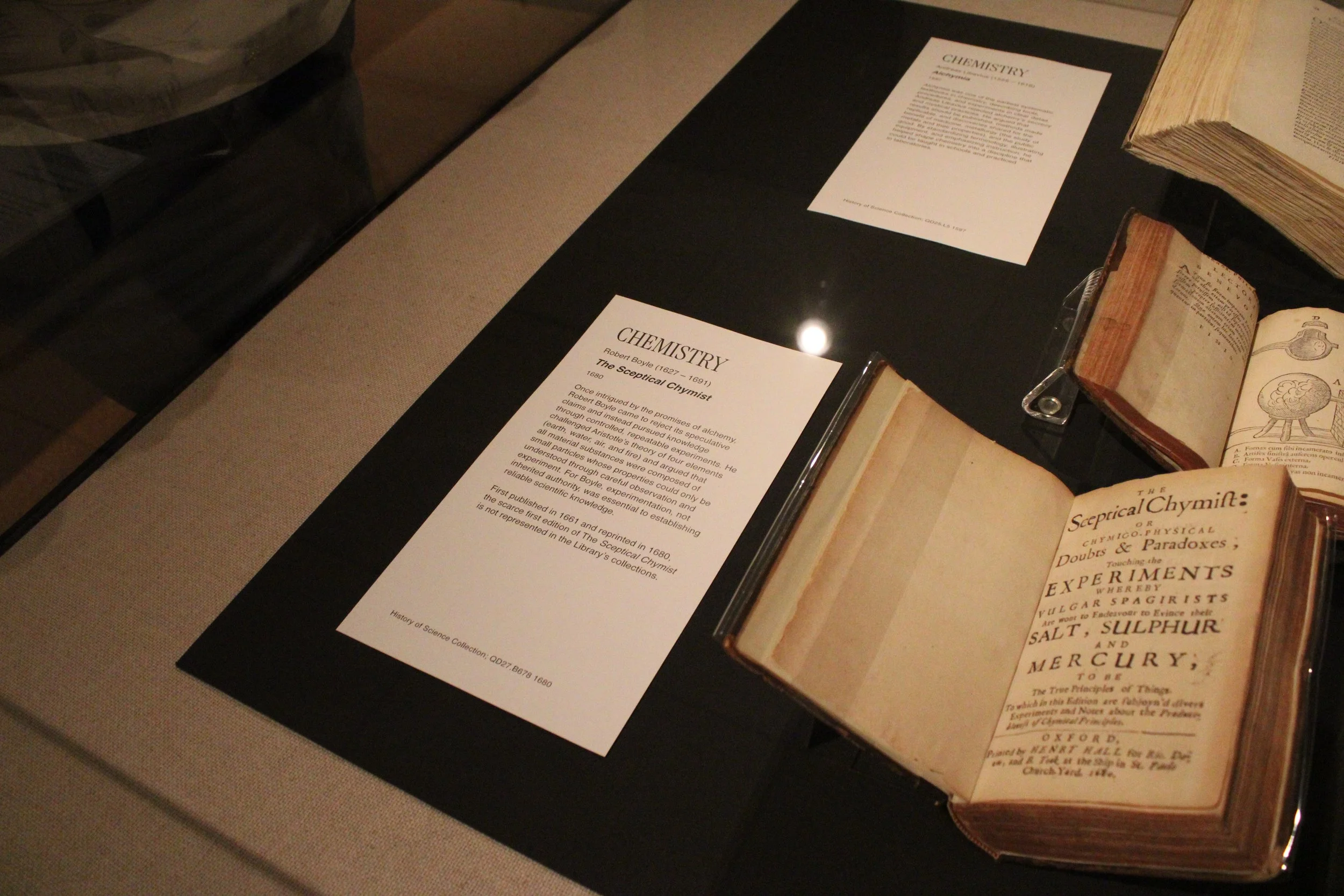
The Sceptical Chymist (1680)
Robert Boyle (1627 - 1691)
Once intrigued by the promises of alchemy, Robert Boyle came to reject its speculative claims and instead pursued knowledge through controlled, repeatable experiments. He challenged Aristotle’s theory of four elements (earth, water, air, and fire) and argued that all material substances were composed of small particles whose properties could only be understood through careful observation and experiments. For Boyle, experimentation, not inherited authority was essential to establishing reliable scientific knowledge.
Historical Profiles
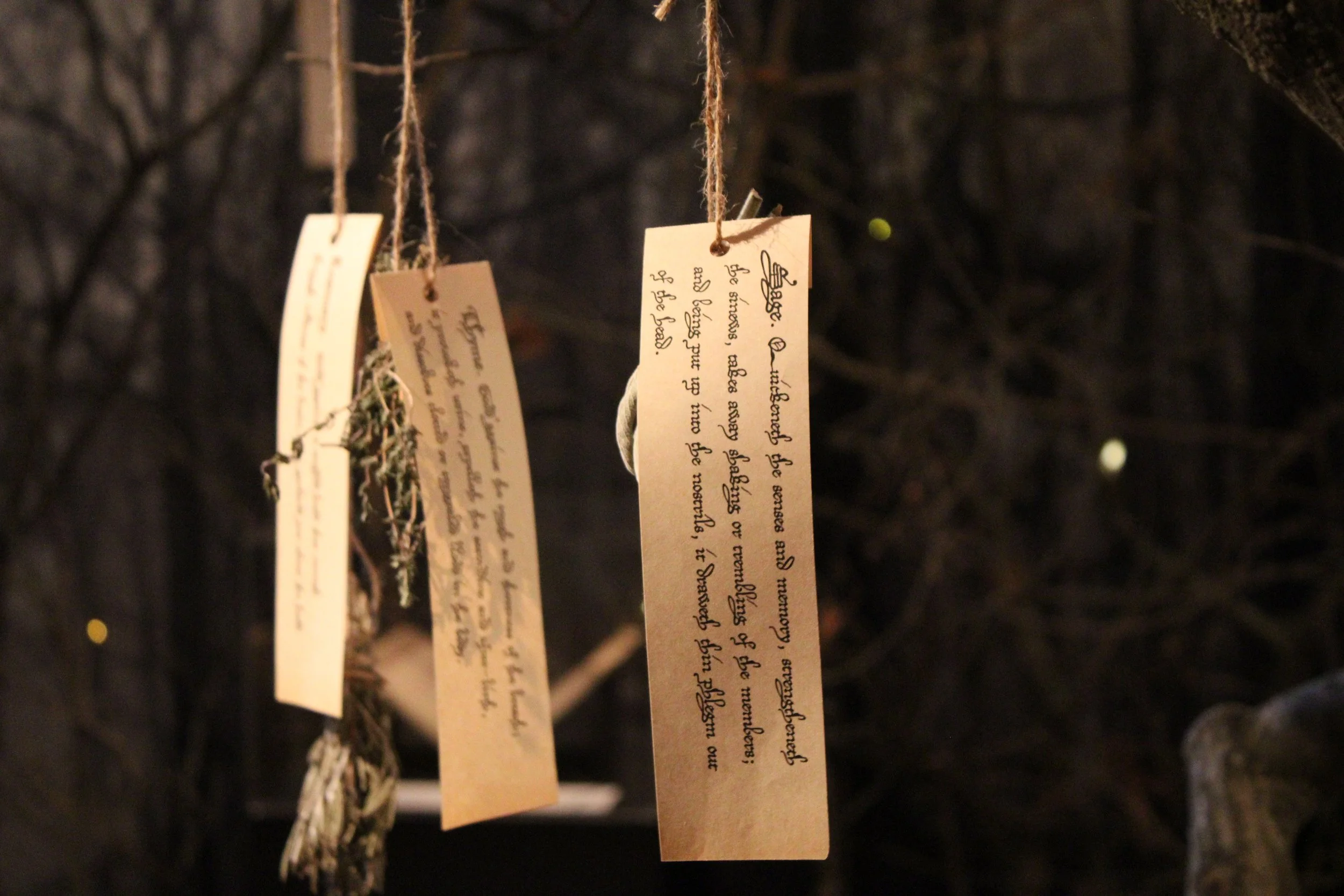
Descriptions of drying herbs and their medieval medicinal use. This reads, “Sage, quickeneth the senses and memory, strengtheneth the sinews, take away shaking or trembling of the members; and being put up the nostril, it draweth thin phlegm out of the head
|
Book Labels
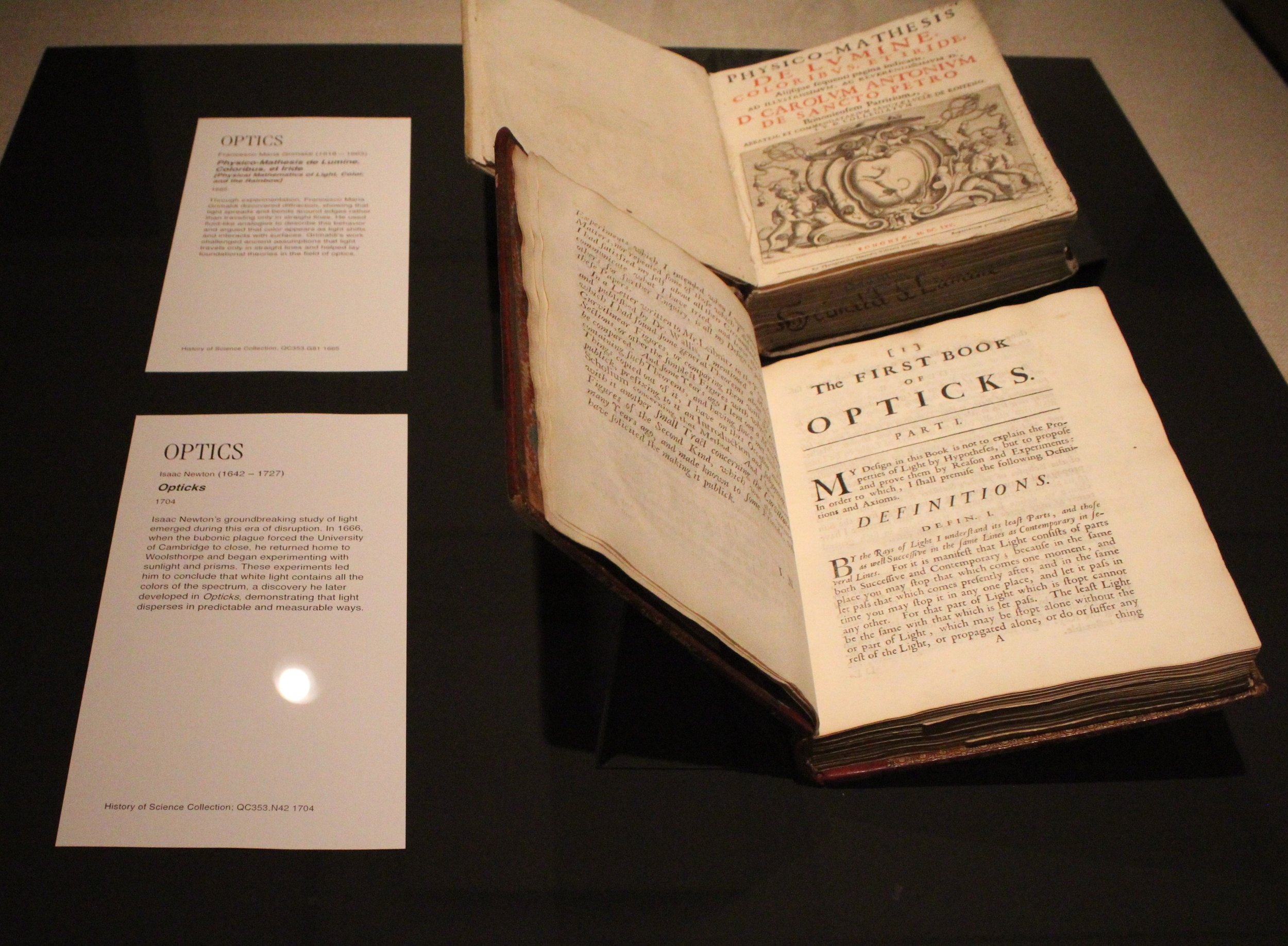
Optiks (1704)
Isaac Newton (1642 - 1727)
Isaac Newton’s groundbreaking study of light emerged during an era of disruption. In 1666 when the bubonic plague forced the University of Cambridge to close, he returned home to Woolsthorpe and began experimenting with sunlight and prisms. These experiments led him to conclude that white light contains all the colors of the spectrum, a discovery he later developed in Optiks, demonstrating that light disperses in predictable and measurable ways
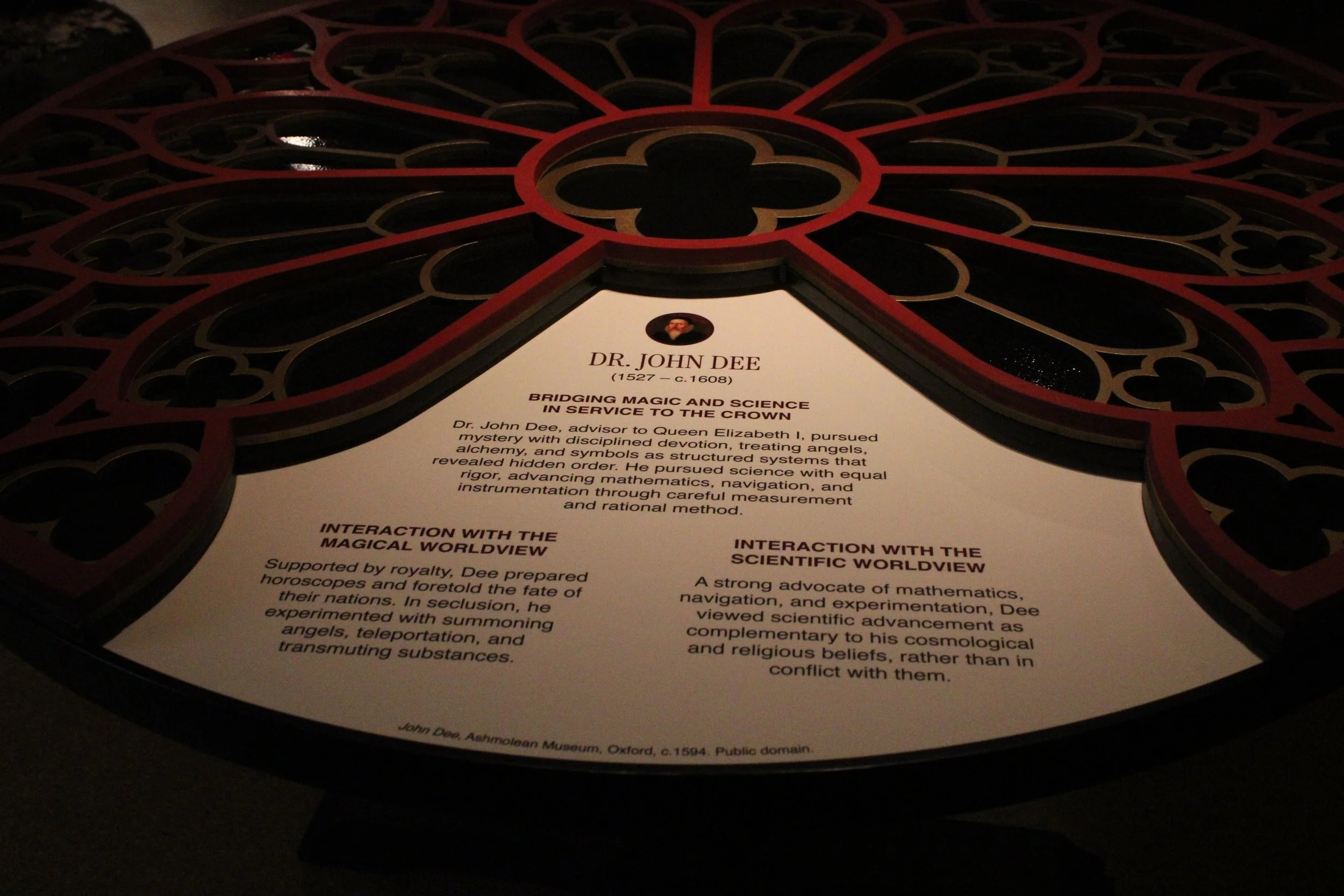
Dr. John Dee (1527 - 1608)
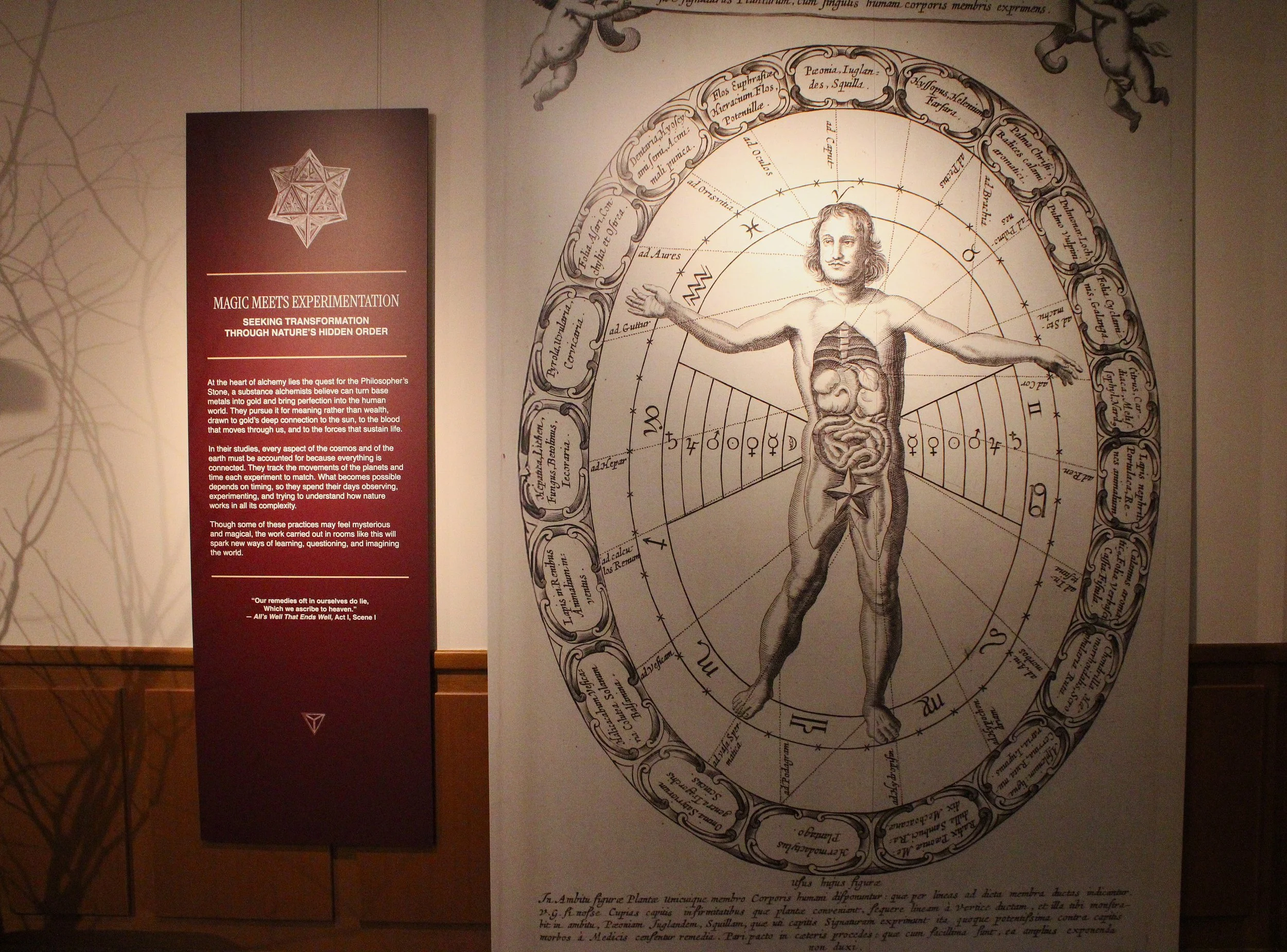
Bridging Magic and Science in Service to the Crown - Dr. John Dee, advisor to Queen Elizabeth I, pursued mystery with disciplined devotion, treating angels, alchemy, and symbols as structed systems that revealed hidden order, He pursued science with equal rigor, advancing mathematics, navigation, and instrumentation through careful measurement and ration method.
Interaction with the Magical World View - Supported by royalty, Dee prepared horoscopes and foretold the fate of their nations. In seclusion, he experimented with summoning angels, teleportation, and transmuting substances.
Interaction with the Scientific Worldview - A strong advocate of mathematics, navigation, and experimentation, Dee viewed scientific advancement as complementary to his cosmological and religious beliefs, rather than in conflict with them.
|
Photo from the Linda Hall Library Website
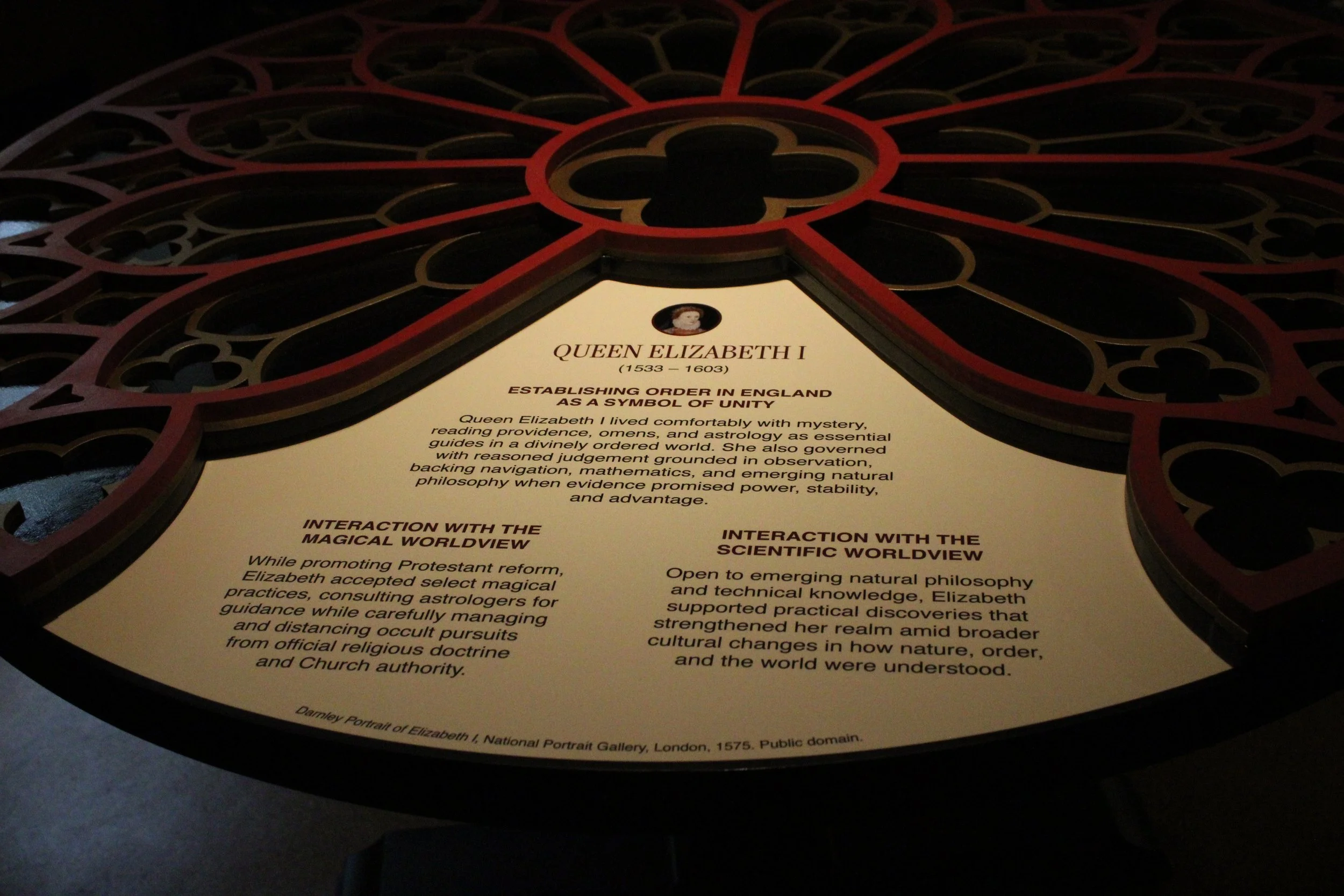
Queen Elizabeth I (1533 - 1603)
Establishing Order in England as a Symbol of Unity - Queen Elizabeth I lived comfortably with mystery, reading providence, omens, and astrology as essential guides in a divinely ordered world. She also governed with reasoned judgement grounded in observation, backing navigation, mathematics, and emerging natural philosophy when evidence promised power, stability, and advantage.
Interaction with the Magical World View - While promoting Protestant reform, Elizabeth accepted select magical practices, consulting astrologers for guidance while carefully managing and distancing occult pursuits from official religious doctrine and Church authority.
Interaction with the Scientific Worldview - Open to emerging natural philosophy and technical knowledge, Elizabeth supported practical discoveries that strengthened her realm amid broader cultural changes in how nature, order, and the world were understood.
Interactive elements
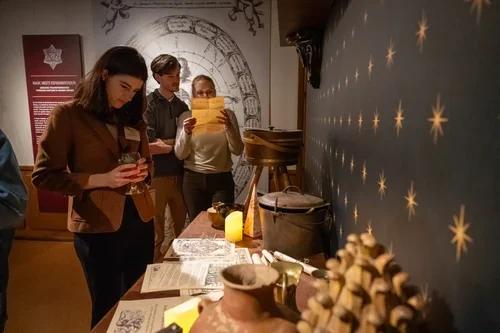
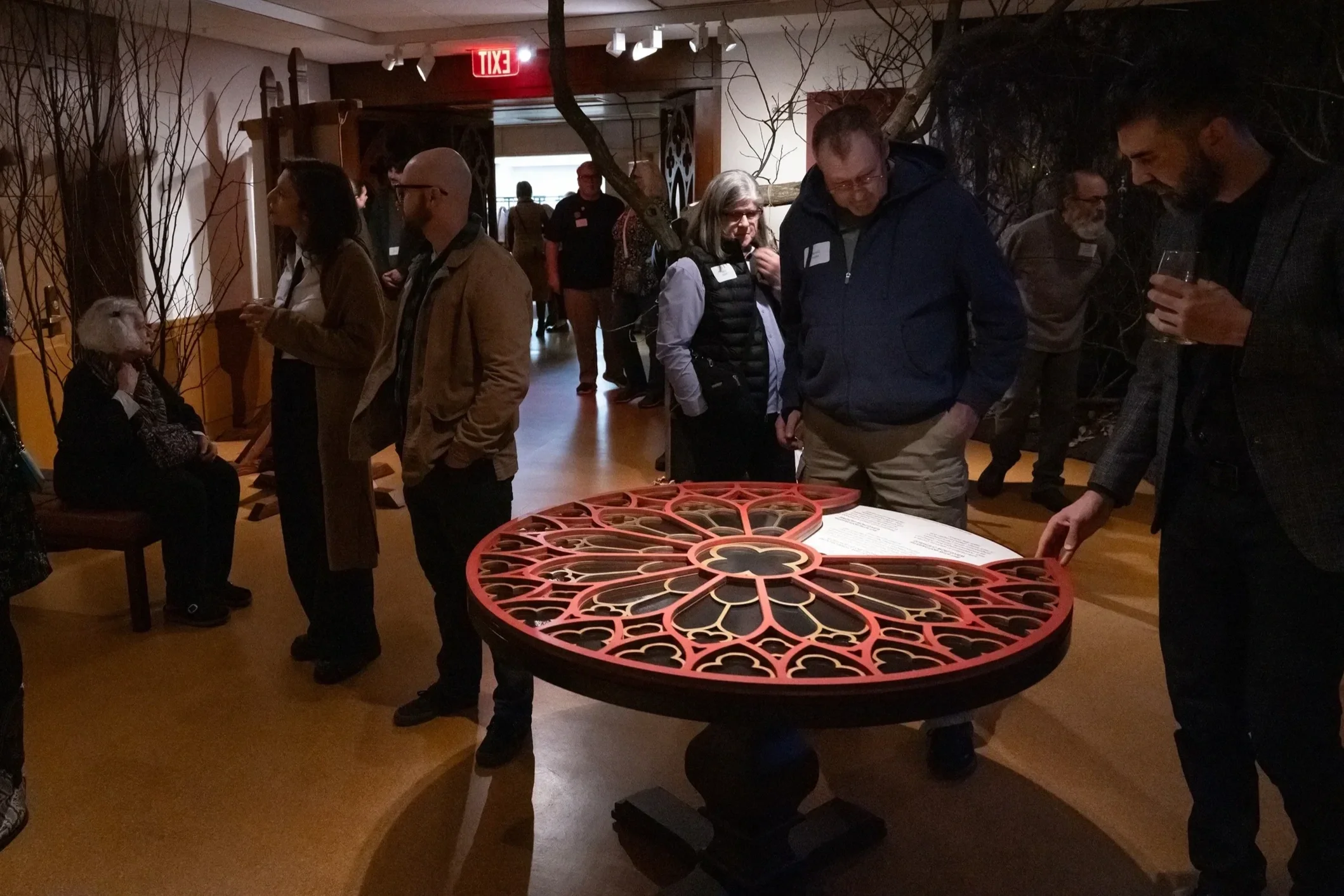
An alchemist’s lab including journal entries and a puzzle for guests to solve.
Picture from Linda Hall Library website